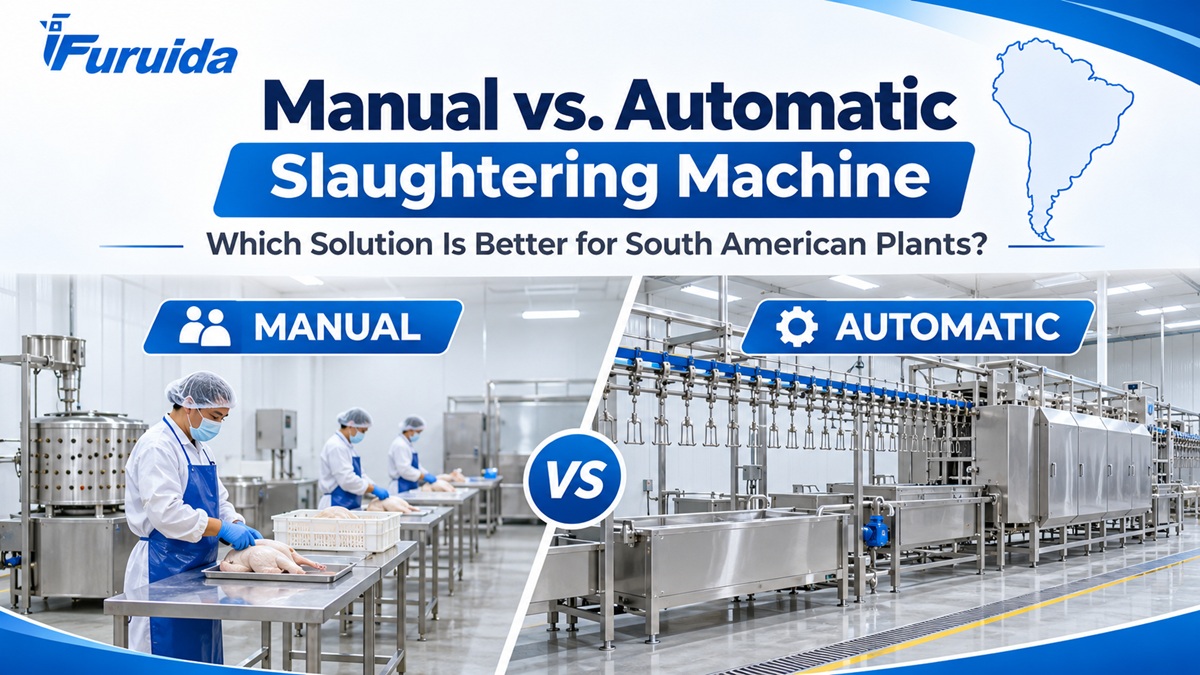
Manual vs. Automatic Slaughtering Machine: Which Solution Is Better for South American Plants?
South America’s meat industry is growing, and meat plants are facing more pressure to meet demand. Plant owners must balance output, labor, cost, hygiene, and upkeep at the same time. That makes the choice between manual and automatic slaughtering machines more important than ever.
The region has a wide mix of meat plants. Some are small local units, but others are big plants producing for export markets. The USDA reports that Argentina has about 350 slaughter facilities. Yet around 95% of its slaughter takes place in about 200 of them. In Brazil, JBS lists 31 fresh chicken plants that can process 5.76 million broilers per day. This demonstrates that no single setup is for all plants.
Market pressure is also rising. The USDA forecasts that Argentina will slaughter about 13.0 million cattle in 2026, down 600,000 head from 2025. At the same time, cattle are getting heavier. With fewer animals but more weight per head, plants need to use each animal well. Meat yield, waste, labor, and work speed all affect profit.
So, what works for your plants?
This guide is a comparison of manual slaughtering machines and automatic slaughtering machines in various aspects. It examines the advantages, as well as where it could produce issues. Plant size, animal type, target output, labor costs, and plans are all important. Combining these factors will allow you to determine an appropriate setup without spending money on equipment that you don’t need.
Manual vs. Automatic Slaughtering Machine: What Is the Difference?
The difference comes down to who does the work. In one system, people do most of it. In the other, machines take over the steps that repeat all day long.
What Is a Manual Slaughtering Machine?
A manual slaughtering machine setup means workers handle most of the slaughter and processing tasks. The plant may still use mechanical tools and equipment, but workers control the pace and carry out many steps by hand.
Common equipment includes manual bleeding systems, hoists, cutting tools, manual skinning or dehairing tools, stainless-steel work tables, and simple handling systems.
This setup can suit small slaughterhouses and plants with low or changing output. It can also work well when a plant wants a simple process and has enough trained workers.
However, manual does not mean poor control or low hygiene. A manual plant still needs good cleaning, sanitation, process control, and worker hygiene. Codex guidance stresses that food safety relies on proper facilities, cleaning, maintenance, and personal hygiene, whatever production method a plant uses.
What Is an Automatic Slaughtering Machine?
An automatic slaughtering machine uses powered equipment to repeat the same steps the same way. This may involve automatic conveying, mechanical bleeding, skinning or dehairing, evisceration, handling of carcass, washing, and chilling, depending on the species.
The goal is not to replace people. It helps workers to reduce hard and repetitive work. This eases the day-to-day workload and helps in maintaining a steady flow of the carcass through the plant.
An automatic slaughtering machine is suitable for medium- or large-scale plants with continuous production requirements. However, the automation level should be suited to the actual needs of the plant. If the plant doesn’t have sufficient volume to maintain the system, it can increase the cost without adding value.
The Main Difference
| Factor | Manual Slaughtering | Automatic Slaughtering |
| Who does the work | Workers, by hand or simple tools | Machines, with workers supervising |
| Labor need | High (8-12 workers per deboning line) | Low |
| Line speed | Limited by worker pace | Fast and steady |
| Upfront cost | Low | High |
| Running cost | Higher labor spend | Lower labor spend, higher upkeep |
| Hygiene | Depends on staff habits | Less handling, easier to standardize |
| Consistency | Varies by worker and shift | Uniform results |
| Meat yield | Often higher | Can be slightly lower |
| Worker safety | Repetitive strain risk | Fewer injury risks |
| Best for | Small plants, low volume | Large plants, high volume |
Manual vs. Automatic Slaughtering Machine: Key Comparison Factors
This is the heart of the manual vs. automatic slaughtering machine decision. Use these eight factors to compare a manual slaughtering machine and an automatic one fairly.
Initial Equipment Cost
Manual systems need less money up front. Automatic systems need more. Cost is the first point in any manual vs. automatic slaughtering machine review. However, don’t just look at the cost of the machine. Include installation, electrical, and support equipment on both sides. A fair manual vs. automatic slaughtering machine cost check looks at the full project. Discuss with each supplier what is included in the price. Search for delivery, setup and training.
Labor Requirements
A manual slaughtering machine line needs more operators. An automatic line requires less people to repeat work. The total cost may change over the years due to the wage rates, turnover, and training. Run the numbers for five to ten years, not just year one. When comparing manual slaughtering machines to automatic slaughtering machines, this process can make all the difference.
Production Capacity
First, look at how many animals your plant needs to process each hour and each day. Then choose equipment that can handle that load, with some extra capacity for future growth.
But do not go too far. A large automatic slaughtering machine may look useful, but if your plant cannot keep it busy, much of that capacity goes unused. You still pay for the machine, power, and upkeep.
The same applies to manual lines. If workers have to keep up with a line that is too fast, they may get tired. This can lead to mistakes, slowdowns, and more work. The right capacity should fit your daily output without leaving too much equipment or labor unused.
Hygiene and Food Safety
Reducing hand contact can help improve hygiene. There is no machine that can clean itself, though. Manual and automatic systems require correct cleaning, sanitation, water control, and worker hygiene. Poor facilities and poor cleaning practices can increase the risk of contamination and worker safety issues. Good equipment must be combined with good hygiene practices. When planning a manual vs. automatic slaughtering machine setup, also include cleaning tools, proper drainage, and worker training in the budget.
Processing Consistency
Machines perform the same operations repeatedly. This can help to maintain even work. With manual work, results can change from one worker to another. It is important to have the skill and experience. Still, a manual slaughtering machine line can give good results when workers are well trained. Clear work steps and regular checks can also help to maintain quality.
Maintenance and Spare Parts
Manual equipment is simpler to fix. A manual slaughtering machine has fewer parts that can fail. Automatic lines need electrical, mechanical, and control support. In South America, parts supply and service response can vary by region. Ask suppliers where they store parts and how fast help arrives. This step is easy to skip. Yet it is a big part of the manual vs automatic slaughtering machine choice.
Energy and Utility Requirements
The FAO notes that a more automatic slaughterhouse needs a solid energy supply. Compare power, water, compressed air, refrigeration, and wastewater needs. Then check that your site can deliver them every day. A manual slaughtering machine line usually asks less of your power and water systems.
Which Solution Fits Different South American Plants?
No single system is applicable to all meat plants in South America. A small local plant has very different needs from a large export facility. Brazil and Argentina also have different market conditions and growth rates, and equipment needs may differ between plants.
Small Local Slaughterhouses
Simple and low-maintenance setups are often required for small plants. A manual or semi-automatic line is acceptable for lower output and doesn’t require a big initial investment. It also helps the owner in managing the daily work more easily. As demand grows, new equipment can be added step by step.
Medium-Sized Meat Processing Plants
This is where a combination of manual and automatic machinery can be effective. The plant can automate all the more time-consuming tasks, which leaves other jobs manual. It helps control labor needs without the cost of a fully automatic line. More equipment can be added as the plant grows.
Large Commercial Slaughterhouses
Large plants handle a lot of animals each day, so the line needs to keep running without delays. Many repetitive tasks can be performed at a regular pace by automatic equipment. It can also help to ensure uniformity in a high-volume operation.
Export-Oriented Plants
Export markets raise the bar. Hygiene and traceability matter more. The USDA notes that Argentina expects gains from three moves. They are China’s new beef quotas, a wider US low-duty quota, and the EU-Mercosur trade deal. Plants that chase those markets need consistent processing. Equipment should also match the food-safety rules of each target market. Ask your buyers what they expect before you settle the manual vs automatic slaughtering machine question.
Manual vs. Automatic Slaughtering: Why a Hybrid Line May Be the Practical Choice
A plant doesn’t have to be completely manual or completely automatic. In many instances, a combination of both may be more appropriate.
The idea is quite simple. Use machines for jobs that take a lot of time or workers, and keep manual work where workers need more control. A plant can utilize automatic conveying and washing, but some cutting work and inspection still must be performed manually.
For example:
- Manual inspection
- Semi-automatic cutting
- Automatic conveying
- Mechanical skinning
- Automatic washing
This kind of setup can help control the cost without slowing down the whole line. It also gives the plant room to make changes later. If production goes up, more machines can be added when they are actually needed.
Consider a mid-size pork plant where workers spend a lot of time moving carcasses from one area to another and washing them. The owner could start by adding a conveyor and an automatic washer. Workers can still handle inspection and final trimming. This takes some of the heavy work off the team without changing the whole process.
If the plant gets more orders later, the owner can add another machine or upgrade another part of the line.
So, the goal is not to automate everything. Look at where the plant is losing time or using too much labor. Then automate those parts first.
How to Choose the Right Slaughtering Machine for a South American Plant
Use this checklist. It covers eight factors.
- Animal species: Different equipment is required for different types of animals such as cattle, pigs, sheep, goats, and poultry.
- Required output: Work out how many animals you need to process each hour and each day.
- Labor: Look at the number of workers you have, their skills, and local wage costs.
- Budget: Include the machine, installation, utilities, training, and other setup costs.
- Plant space: Review the space available for machines, employees, and product movement, drainage, and clean-up.
- Hygiene: Select equipment that is readily sanitizable and designed for food processing.
- Maintenance: Find out how easy it is to get spare parts and technical help.
- Future growth: Think about whether you may need more capacity later.
Once you have these details, it becomes easier to see which type of line fits your plant. You can then ask two or three suppliers to quote for the same setup. This will help you get a better deal and a comparison of the equipment.
Common Mistakes When Buying Slaughterhouse Equipment
Avoid these errors when weighing a manual vs. automatic slaughtering machine purchase:
- Choosing equipment only because it has a lower price.
- Buying a line with much more capacity than you need.
- Forgetting local labor and repair costs.
- Not checking spare-part supply.
- Purchasing equipment before considering the plant layout.
- Monitoring power, water, drainage, and compressed air.
- Choosing equipment that does not suit your animal species.
- Leaving no room for future growth.
- Working with a supplier that offers little installation or after-sales support.
Final Thoughts
There is no universal solution for all the meat plants in South America. A small plant might require minimal equipment, which is simple to operate and maintain. For a larger plant, increased automation could be necessary to meet daily demand. If the plants are growing, a combination of manual and automatic equipment is a viable alternative.
Before you make a decision, look at your animal type, daily output, labor, budget, plant space, hygiene needs, and future plans. You should use the right equipment that is comfortable for you today and will still accommodate your future growth.
Before you make a decision, look at your animal type, daily output, labor, budget, plant space, hygiene needs, and future plans. Choose equipment that fits your needs today and can still support your future growth.
Looking for a slaughtering line for your South American plant? Talk to Furuida Equipments today. Tell us about your animal type, target capacity, and plant needs, and we will recommend a slaughterhouse equipment solution that fits your real production needs.
FAQs
Is an automatic slaughtering machine better for large slaughterhouses?
Usually, yes. In a manual vs automatic slaughtering machine comparison, large plants need steady, high output and consistent processing. An automatic slaughtering machine line supports that flow. It also lowers labor needs and cuts hand contact with carcasses.
Are manual slaughtering machines suitable for small plants?
Yes. A manual slaughtering machine setup costs less and is simple to maintain. It also handles small or mixed batches well. It fits plants with low daily volume and limited capital.
Does an automatic slaughtering line reduce labor costs?
It can. Machines take over repeated and heavy tasks, so you need fewer workers. But maintenance, power, and technician costs rise. Compare total costs over several years.
What capacity should a slaughtering machine have?
Base it on animals per hour and per day, plus a growth buffer. Avoid big oversizing. Idle capacity wastes money. Modular equipment lets you add capacity later.
Can a slaughterhouse use both manual and automatic equipment?
Yes. Many plants run hybrid lines, which blend the strengths of manual and automatic machines. They automate high-labor steps, such as conveying or washing. They keep manual work for inspection or flexible tasks. This balances cost and output.
What should South American plants consider before buying slaughterhouse equipment?
Start with the manual vs. automatic slaughtering machine question. Then consider species, throughput, labor, budget, layout, hygiene, utilities, spare parts, and growth plans. Also check local technical support and target market rules, especially for export.