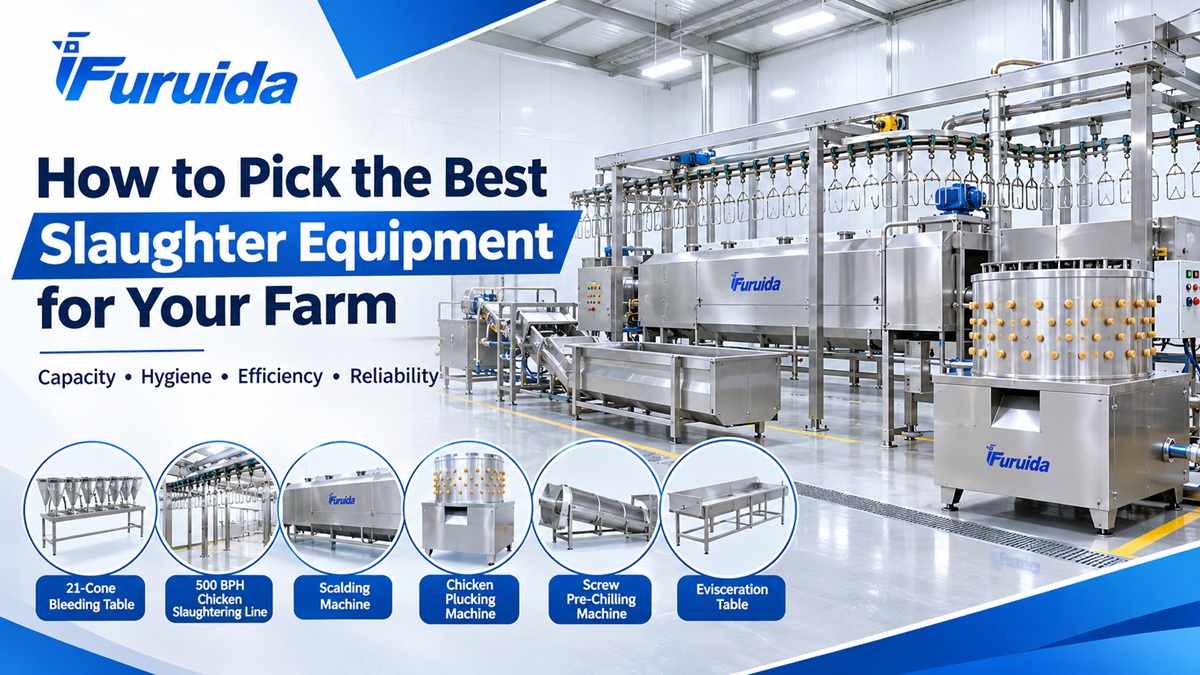
How to pick the best slaughter equipment for your farm
The selection of the slaughter machinery is one of the most crucial decisions that a farm owner can make. It impacts your productivity, your team’s safety, regulatory compliance — and your bottom line.
From a small family farm to a medium-sized livestock enterprise, the wrong piece of equipment can slow you down, cost you money, and add needless risk. The right setup makes all the difference.
This guide makes it easy to understand what to look for when purchasing slaughter equipment and to make an informed decision.
Why Choosing the Right Slaughter Equipment Matters
Many farm operators do not realize the impact of the equipment their choice will have on their daily operations. Inappropriate equipment results in slower processing times, higher labor costs, and inconsistent meat quality.
However, dedicated slaughtering machines created for your stock type provide you the following:
- Higher throughput per hour
- Improved hygiene and food safety standards
- Reduced physical strain on workers
- It demands less physical effort from workers.
- Save money in the long run.
- Longer equipment lifespan
In short, the right meat processing equipment pays for itself quickly.
Key Factors to Consider When Selecting Slaughter Equipment
1. Type of Livestock You Process
Each animal has a unique set of tools. There are different types of livestock processing equipment for beef cattle, pigs, sheep, goats, and poultry depending on their size, weight, and anatomy.
Before anything else, match your equipment to your primary animal type. Modular or flexible arrangements are required for multi-species farms. A one-size-fits-all solution rarely works and often costs more in the long run.
2. Processing Capacity and Volume
How many animals do you process per day or per week? This number will dictate what size equipment you require.
The needs of a small farm, which processes 10 animals daily, are quite different from those of a medium-sized farm, which processes 200 animals daily.Oversized equipment wastes capital. Too small a machine results in a bottleneck.
Match your animal slaughter machine capacity to your current volume — with some room to scale up as your business grows.
3. Hygiene and Food Safety Standards
Food safety is a mandatory requirement. Any butchering equipment purchased must comply with hygiene standards set by local and national regulations.
Look for:
- Easy to clean, easy corrosion-resistant construction of stainless steel
- Clean and smooth surfaces that do not contain crevices where bacteria could hide
- Staff trained in food hygiene and safety
- Easy access for cleaning and sanitary purposes daily.
Compliance saves your business from expensive downtime and helps to attract customers.
4. Humane Slaughter Compliance
The world is increasingly enforcing animal welfare laws. In many areas, humane slaughter equipment is not only a legal requirement; it is also becoming the expectation of many buyers and retailers.
Purchase restraining and stunning equipment that complies with humane slaughtering standards. This will ensure that your business’s reputation is safeguarded and you are following responsible farming practices.
5. Ease of Use and Operator Training
The more complex the equipment, the longer the training duration, and the more mistakes would be made. Seek out slaughter equipment that can be mastered quickly and used safely with minimal supervision.
Easy-to-use controls and ergonomic design minimize accidents and increase day-to-day productivity.
6. After-Sales Support and Spare Parts
Downtime is expensive. When buying, ask:
- Is the supplier available to install and train at your site?
- Are spare parts easily available?
- Do you have a service contract or maintenance contract?
- What is the timeframe for technical support to respond?
Having a supplier who provides good after-sales service is more valuable than a machine that is marginally cheaper that has no after-sales service.
Quick Comparison: Slaughter Equipment by Livestock Type
Livestock Type |
Key Equipment Needed |
Special Consideration |
Cattle / Beef |
Stunning guns, hide pullers, splitting saws |
Heavy-duty frames and hoists required |
Pigs / Swine |
Scalding tanks, dehairing machines, evisceration tools |
Temperature control is critical |
Sheep / Goats |
Skinning equipment, overhead rails, gambrel hooks |
Compact setups work well |
Poultry |
Poultry slaughter equipment, pluckers, evisceration lines |
High-speed automation common |
Common Mistakes Farm Owners Make When Buying Slaughter Equipment
Avoid these pitfalls:
- Avoiding the price cut — inexpensive equipment is usually more costly in terms of repairs and replacements.
- Violation of local regulations — non-compliance with regulations can cause an operation to be closed
- Not doing a site assessment — your facility layout will determine which equipment will fit and work
- Failure to monitor worker safety features — injury caused because there are no guards or safety features present, or they are missing.
- Not anticipating growth — purchasing equipment that will outlast your company’s needs
Tips for Getting the Most Out of Your Farm Slaughter Tools
After selecting equipment, these best practices will help you obtain maximum value:
- Schedule regular maintenance — follow the manufacturer’s maintenance calendar
- Train staff in proper use, extending use life and reducing accidents
- Maintain cleaning records in detail – particularly for food safety audits
- Check equipment every day — pick up small problems before they become big problems!
- Reassess capacity annually – as your business expands, re-evaluate your equipment requirements.
Conclusion
The selection of slaughter equipment is influenced by various factors, such as the nature of the animals, the scale of slaughtering, the regulations, and the expansion plans of your farm. A systematic approach will help you to be efficient and remain fully compliant with regulatory requirements.
Making the right decision can affect profitability, product quality, and the reputation of your farm in the long run. Proper assessment helps you prevent expensive blunders and make sure you get the best performance in the long run.
Reach out to Nanjing Furuida Equipment Co., Ltd. for solutions engineered to your operation in a reliable manner. Whether you’re looking at individual machines or an entire processing line, we can help you create the ideal system for your farm.
FAQs
What is the most important factor when choosing slaughter equipment?
Match equipment with your livestock type and processing size to ensure efficient operation and eliminate problems.
How do I ensure my slaughter equipment meets food safety regulations?
Use stainless steel equipment and food-grade-certified equipment that meets local and national safety regulations.
What is humane slaughter equipment, and do I need it?
Is often required by law and has a stunning and restraining system, which will reduce animal stress.
How often should slaughter equipment be serviced?
Monthly inspections are recommended, with a full service every 6–12 months depending on usage volume.