Duck and goose processing equipment: why it’s different from chicken lines
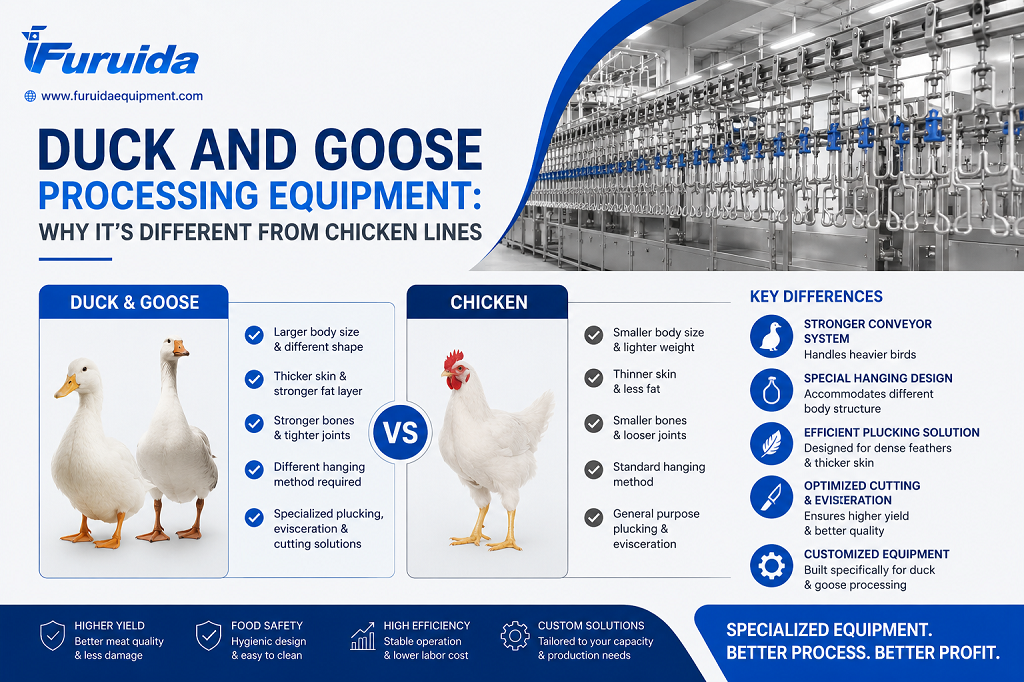
If you can process a chicken, you can process a duck or a goose, right? No, not even close. Duck and goose processing breaks almost every rule that chicken lines are built around. The fat structure is different. The feather type is different. The body weight and density are different. And if your processing equipment isn’t built to handle those differences, you’ll face line stoppages, poor yield, product damage, and very unhappy clients. This blog is for processors, facility managers, and equipment buyers who are ready to understand what actually separates waterfowl processing from standard broiler operations and what that means for your investment in the right processing equipment.
The Fat Problem Nobody Talks About Enough
Here’s what separates waterfowl from everything else on your line: the fat. Ducks and geese carry a thick, dense subcutaneous fat layer that chickens simply don’t have. This fat doesn’t just affect flavor; it changes how the bird behaves at every stage of processing. When heat is applied incorrectly during scalding, the fat layer can trap heat. When the temperature is cold, feathers will not loosen. This is why standard setups are insufficient. That is why they require special processing equipment to regulate temperature and preserve the products quality.
Scalding Systems: Precision Over Standardization
Scalding is where the first major difference appears – and where most standard chicken-line thinking breaks down completely. Chicken systems rely on high-temperature, short-duration scalding. That approach doesn’t translate well to waterfowl. Duck and goose processing equipment uses lower temperatures with longer exposure time, which loosens feathers without burning or damaging the skin beneath that thick fat layer. The key differences in a proper waterfowl scalding setup include multi-stage tanks, precise temperature control systems, and gentle water circulation that doesn’t agitate the carcass. Together, these features protect skin integrity – which directly affects your product grade and market value.
Defeathering Technology: Power Meets Control
Removal of feathers is perhaps the most challenging step in waterfowl processing. The feathers of ducks and geese are thick and waterproof and sneer at conventional plucking techniques. This is solved by specialized processing equipment: stronger plucking fingers, adjustable pressure levels, and longer plucking time are combined to strip the feathers off, yet leave the skin undamaged. That balance between force and control is what separates premium-grade products from rejected carcasses at the end of the line.
Waxing Systems: A Step Chicken Lines Don’t Have
A wax dipping system you will not see on any broiler line. After mechanical plucking, fine pin feathers still remain on ducks and geese. The bird is covered with wax, which solidifies over the feathers and, in the process of being stripped, carries off the feathers, always, at scale. The whole processing equipment facility is made up of wax application and wax recovery systems to ensure that the operation is efficient and cost-effective. The outcomes are evident: the final product looks better, the amount of manual finishing work is reduced, and the production is of the export level. In the absence of this step, it is actually hard to have uniform quality even at the commercial volume.
Evisceration: Size and Fat Change Everything
The body size and fat content of ducks and geese are not designed by the evisceration machines generally used on standard chicken. Attempts to squeeze waterfowl into inadequate equipment cause unsightly cuts, risk of contamination, and failed hygiene checks. At this point, proper waterfowl processing equipment involves adjustable cutting tools of larger carcass size, a broader processing line design, and fat management equipment capable of handling the large amount of fat waterfowl generate. These are not optional upgrades; they are what makes your operation and your product clean.
Line Speed vs. Product Quality
Chicken lines are designed to be volumetric. Waterfowl lines should be designed to be accurate first, fast second. Ramming ducks and geese through at broiler-line speeds results in skin tears, incomplete feather removal, and product rejection – all of which directly impact your yield and profitability. Intelligent operators maximize the appropriate speed and not the highest speed. Properly calibrated waterfowl-processing equipment yields increased throughput and quality, not a trade-off between the two.
Automation and ROI: The Business Case
In addition to the different birds, investing in specific processing equipment is a direct investment in your bottom line. Future waterfowl systems are automated, energy efficient, and much less dependent on labor. To B2B purchasers, it implies a quicker payback period, reduced unit expenses of processing, and procedures that may increase in size without requiring a corresponding increase in staff. The initial expenditure on the correct equipment nearly always pays off better than the continuing expense of maintaining the incorrect one.
Conclusion
Replacing chicken with duck or goose processing is not an upgrade process, but rather a change of approach. The misapplication of improper processing equipment can cost you in quality, efficiency, and reputation. When you need a predictable output, better margins, and scalability, then you have no other choice but to go with specialized solutions. Need to modernize your poultry line? Furuida Equipment provides specialized, high-quality, and customized processing equipment that is tailor-made to meet the needs of duck and goose processing. Make the smart move today and future-proof your business.
FAQs
Can chicken processing lines be used for ducks and geese?
Not effectively. Though it may be possible, the standard systems are not as strong and precise and therefore the results are poor.
What is the importance of waxing in duck processing?
Waxing pulls off fine feathers that cannot be removed by plucking; it enhances product quality and market value.
What is the most difficult aspect about goose processing?
The biggest challenges are the feather removal and fat handling, which need specific systems.
How do I choose the best processing equipment supplier?
Look for experience, customization capability, and strong support services. All these you will find in Fururida Equipment.