Bleeding Table vs Traditional Slaughter Table: Which Is Right for Your Farm?
Choosing the right slaughter table is very important for any farm. The right table will help make work easier, maintain meat cleanliness, and improve productivity. This bleeding table vs traditional slaughter table guide will give the distinction between a bleeding table and a normal slaughter table. It will help farm owners and people working in the slaughterhouse to select the most suitable table.
What is a Bleeding Table?
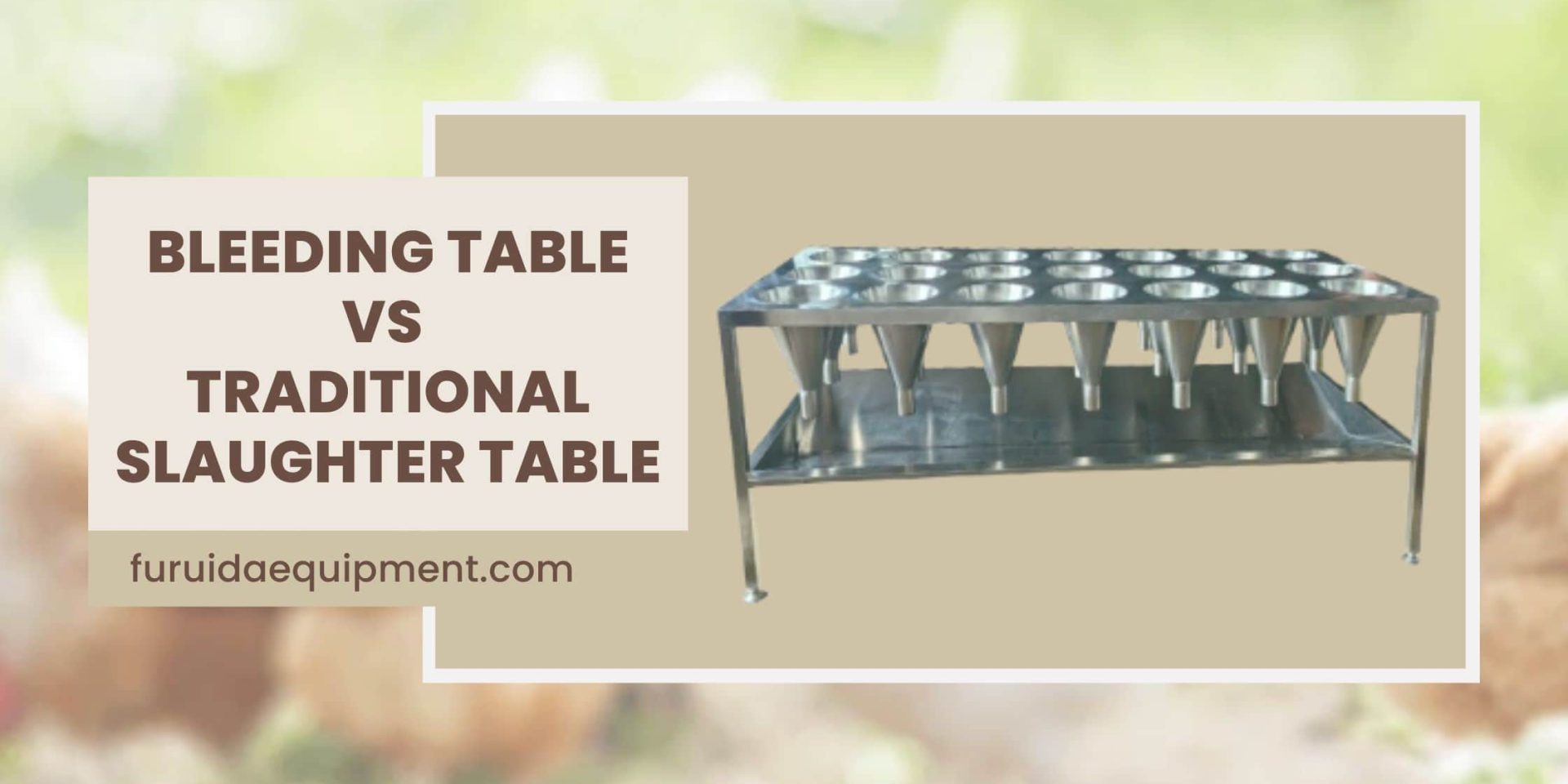
A bleeding table is designed specifically to collect and drain blood after a bird is slaughtered. It is usually used right after stunning or killing, before further processing begins.
Key Features
Sloped Design: The table is slightly tilted so blood flows easily into a tray. This makes the process faster and keeps the floor clean.
Blood Collection Tray: The tray catches the blood, stopping it from spilling on the floor or other equipment. This helps keep the area hygienic and safer for workers.
Stainless Steel Construction: The table is made of stainless steel, which lasts a long time and does not rust. It is also easy to wash, keeping the meat safe and meeting food safety rules.
Advantages
- High hygiene standards reduce the risk of bacterial contamination.
- Helps meet regulatory requirements for humane slaughter.
Common Uses
- Poultry processing
- Goats and sheep
- Small livestock operations
What does a bleeding table do?
It keeps blood away from the meat and work area, reducing contamination and mess.
What is a Traditional Slaughter Table?
A traditional slaughter table is a flat work surface used for general meat processing tasks. It does not focus on blood drainage but supports cutting, trimming, and evisceration.
Key Features
Flat Surface: The table has a flat top, which makes it easy to handle the carcass during cutting and cleaning. It gives a stable work area for better results.
Ergonomic Height: The table is set at a comfortable height for workers. This reduces tiredness and helps them work more accurately.
Versatile Design: The table can be used for different birds and animals, big or small. It works well for many types of meat processing tasks.
Benefits
- Boosts processing speed and efficiency.
- Provides comfort for workers during long hours.
- Supports precise cutting and handling of meat.
Common Tasks
- Skinning
- Gutting
- Cutting and trimming
- Portioning meat
When to use a slaughter table?
Use a slaughter table when the main work involves handling, cutting, and preparing carcasses rather than controlling blood.
A Quick Comparison of Bleeding Table vs Traditional Slaughter Table
| Feature | Bleeding Table | Traditional Slaughter Table |
| Main Purpose | Blood removal | Meat prep & processing |
| Surface | Sloped | Flat |
| Placement | Immediately after stunning | Post-bleeding, pre-processing |
| Hygiene Impact | High | Moderate |
| Throughput Efficiency | Improves blood removal speed | Improves worker efficiency |
Why the Right Table Choice Matters
The selection of the appropriate table is extremely significant to any farm. The bleeding table is used to extract blood rapidly, which keeps the meat fresh, enhances its flavor, and makes it long-lasting.
It is also useful in making things clean. Blood and other fluids are collected properly, minimizing the chances of contamination. This renders the cleaning of the area very easy and secure.
Lastly, the right table makes the entire process quick and easy for the workers. It saves time, cuts down efforts and makes the farm operate in a smoother way.
How to Choose the Right Table for Your Farm
The size of your farm matters when you are choosing a table. On the small farms, one table can be used in both tasks. Separate bleeding and processing tables are better for medium farms. Large or commercial farms need strong, high-capacity tables to handle more and keep work running smoothly.
Hygiene and safety rules should also be observed. Ensure that the table is of local food safety standards and is simple to clean.
Although a good-quality table might be more expensive initially, it enables farmers to save in the long run. They save on labor, work faster and they require less maintenance and give better value in the long run. They have a greater initial cost though they save time, effort and cost in the long term.
Integration in Farm Slaughter Workflow
On a farm, the slaughter process usually starts with stunning, which makes sure the poultry are treated humanely. This is followed by the bleeding table where the blood is removed in a hurry to ensure that the meat remains clean and fresh.
The carcass is then taken to the traditional slaughter table where it is cut and cleaned after bleeding. Lastly, meat preparation includes cutting, packaging, and storage. Work is easier with the help of the right tables at every stage, the area is cleaner, and the meat is of higher quality.
Key Considerations Before Purchase
Material & Durability
The most suitable is stainless steel when it comes to tables. It is durable, rust free and can be washed easily. This ensures the table is clean and sanitary.
Capacity
Ensure that the table supports the size and weight of animals or birds that you process. A small table can slow up the working process and it might be hazardous to large animals.
Easy to Clean
Tables, whose shapes are not complicated, are simpler to clean. Less corners will result in less dirt and germs and hence, clean-up is faster and safer.
Compatibility
Make sure the table is compatible with other equipment. A table that can fit your workflow simplifies work processing and makes it quicker.
Conclusion
Choosing the right table depends on your farm size and how much meat you process. Small farms can use one table for both bleeding and processing, while large farms need two separate tables for each work.
The right tables keep the meat clean, make work easier, and help the farm run smoothly. Furuida Equipment can help you pick the best setup for your farm.
FAQs
Q. Do I need both a bleeding table and a traditional table?
A. Yes. A bleeding table removes blood, and a traditional table is used to handle and cut the meat. Using both makes work easier and meat cleaner.
Q. What is the main difference between a bleeding table and a traditional table?
A. A bleeding table is for removing blood. A traditional table is for processing and preparing the meat.
Q. Can a small farm use a traditional table for bleeding?
A. Yes, but it may not work as well. Blood might not drain properly, and cleaning could be harder.
Q. How often should slaughter tables be cleaned?
A. After every use, to keep the meat safe and the area clean.