
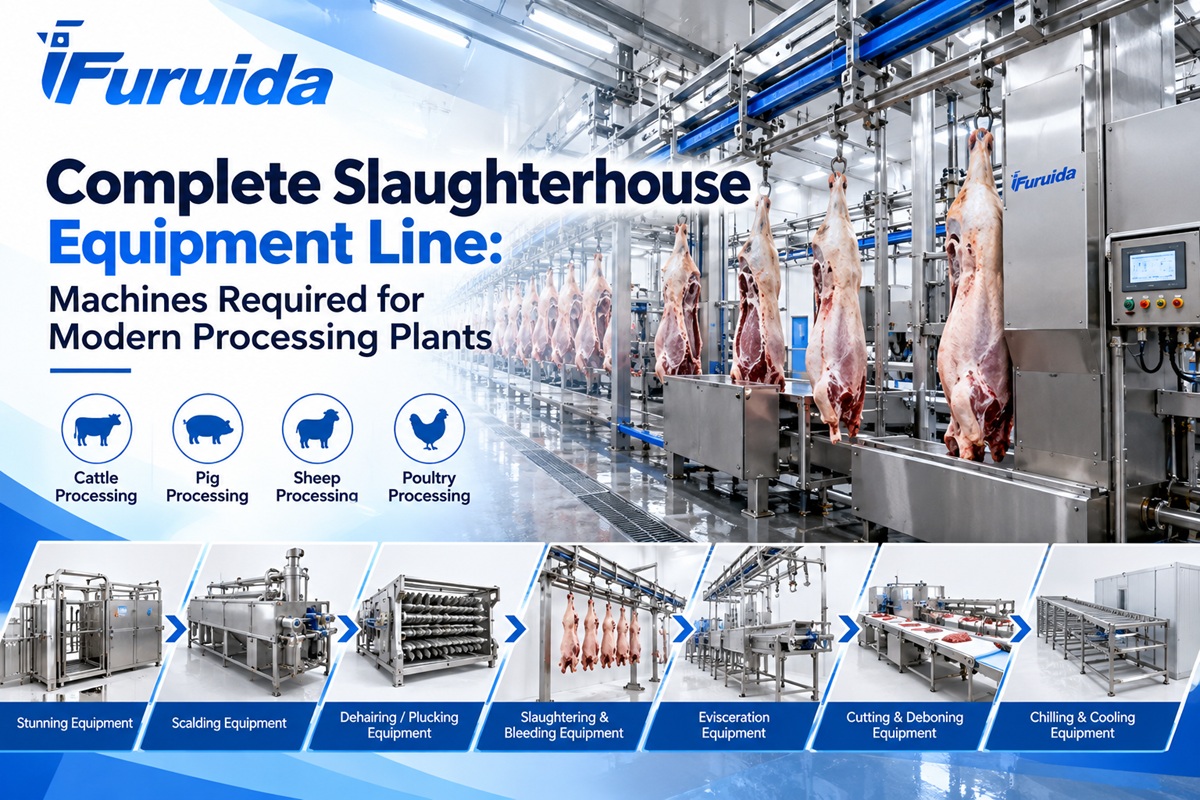
Complete Slaughterhouse Equipment Line: Machines Required for Modern Processing Plants
A modern slaughterhouse needs more than a few good machines. It requires a full system that can safely and cleanly move animals through each stage while producing reduced waste. This full setup is what we mean by a complete slaughterhouse equipment line.
The right slaughterhouse equipment can affect nearly every part of plant work. It is used to regulate output, cleanliness, employee safety, and product quality. Choosing the wrong equipment can result not only in delays but also in hygiene problems and an increased workload for the staff. The right setup ensures that the plant operates efficiently and is prepared for future demands.
Every plant has its own equipment needs. The type of animal is one key factor. The automation level, process flow, daily output, and plant size are also important. The small poultry plant will require a completely different arrangement than a large cattle processing plant.
This guide covers the main stages of a modern slaughterhouse. It explains which machines, including Furuida equipment, are used at each stage, what to look for when choosing them, and which common mistakes can cause problems later.
What Is a Slaughterhouse Equipment Line?
The slaughterhouse equipment line is a system of connected machines that moves an animal from live to finished and packed product. Every machine is responsible for a particular task. However, the true worth is in how effectively all the machines perform as a combined unit. Think of it this way. A stunning box can do its job well, but it cannot run the full process on its own. It must be compatible with bleeding rails, skinning tools, evisceration platforms, and the downstream equipment. These parts can be combined to create a full slaughterhouse equipment line.
A full line usually covers six main areas: slaughtering equipment, carcass handling equipment, processing equipment, cleaning and sanitation systems, refrigeration and cold-chain equipment, and packaging or support systems. This is what sets a planned production line apart from a group of separate machines. Individual machines may work well on their own, but poor flow can still cause delays. Mismatched speeds, weak connections, and different hygiene standards can create problems across the plant.
A well-planned slaughterhouse equipment line ensures that each stage functions with the next. This can assist in sustaining the flow, in supporting hygiene, and enable better use of labor and equipment.
Slaughterhouse Equipment for Poultry Receiving and Handling
A poultry plant starts with calm and organized bird handling. Before slaughter, chickens are received, held, weighed, and moved to the processing area. Transport cages, holding areas, scales, and handling tools help keep this first stage under control.
Smaller plants and farms may not need a highly automated setup. The right choice depends on daily bird numbers, available labor, and floor space. Furuida also supplies chicken transport cages as part of its wider poultry equipment range. This can help buyers source handling and slaughter equipment from one supplier.
The goal is simple: move birds from receiving to slaughter in a smooth and controlled flow. A well-planned layout also makes cleaning easier. It can help keep traffic between the clean areas and processing areas to a minimum.
Stunning and Bleeding Equipment
Stunning and bleeding are the first key steps inside a poultry slaughterhouse. After stunning, birds are bled before they move on to scalding and feather removal. The equipment should keep the works moving steadily and ensure good hygiene for the operator. It should also be compatible with slaughter regulations in the area.
Furuida has a 21-cone bleeding table for small and medium-sized plants. It is made from 304 stainless steel and has 21 cones to hold birds during bleeding. The sloped surface will facilitate the drainage of blood away from the working area, and the smooth steel will facilitate the easy cleaning. Furuida states that this model can handle up to about 300 birds per hour.
For larger plants, use Furuida’s 500 BPH Chicken Slaughtering Line. It integrates multiple stages into a single system, eliminating the need for manual connections between the various machines.
When choosing stunning and bleeding equipment, consider bird type, daily output, slaughter method, operator needs, drainage, and local animal welfare rules.
Scalding Equipment for Poultry Processing
After bleeding, carcasses usually move into the scalding stage. Hot water loosens the feathers, making them easier for the plucker to remove. Scalding is the key step between bleeding and defoathering.
Furuida offers a customized scalding machine and an electric automatic scalding machine. The custom model is made from 304 stainless steel and can be configured to fit the plant space and number of birds. This can be useful when a standard machine is not appropriate, or for desired output that cannot be achieved.
The electric automatic model gives operators better control over the scalding process. Water temperature is important at this stage. If the water is not hot enough, feathers may be hard to remove. If it is too hot, it can damage the skin.
When comparing scalding machines, check their capacity, heating method, temperature control, tank size, water use, cleaning access, and overall fit with the plucking machine that follows.
Poultry Plucking and Feather Removal Machines
Once scalded, the birds go to the defeathering stage. Plucking machines remove the feathers and reduce the need for manual work. They also help keep the poultry slaughter line moving at a steady pace.
Furuida offers a 7-stick horizontal plucking machine for commercial poultry plants. It uses rubber plucking sticks to remove feathers as the birds pass through. It is made of stainless steel, fitted with a feather collection chute and a listed capacity of approximately 300-500 chickens per hour.
For plants with different space or line needs, Furuida also provides a customized A-shaped chicken plucking machine. The machine can be adjusted to suit the plant layout and required output.
When choosing a plucker, consider bird size, production capacity, available floor space, labor needs, and the scalding system. Easy cleaning is also a factor because feathers, water and organic material can accumulate around the machine during operation. Regular cleaning and maintenance help keep the equipment running smoothly.
Evisceration Equipment for Chicken Processing
After defeathering, the birds move to evisceration. After washing and chilling, workers open the carcass and extract all the internal organs. It is important to have good hygiene and a clean work environment during this stage because it will expose the inside of the bird.
Furuida offers an Eviscerate Table made from 304 stainless steel. It has 16 evisceration stations, which allocates a specific area to each worker for the task. This will ensure a well-organized working area and a continuous flow of processing.
A dedicated evisceration table can be useful if this stage is managed by skilled workers for smaller and medium-sized plants. It also offers a definite place to wash and clean and to inspect.
When choosing evisceration equipment, consider the number of operators, bird throughput, table size, drainage, cleaning access, and how the table connects with the washing and chilling stages.
Poultry Washing and Pre-Chilling Equipment
After evisceration, carcasses need to be cooled. Washing first helps remove leftover blood and visible debris before the birds enter the chilling stage.
Furuida offers a customized screw pre-chilling machine for poultry plants. It is designed to lower product temperature after slaughter and move the birds into the cold chain. Furuida lists a stainless steel build, an open design for easier cleaning, and energy-efficient operation. The company says the machine can suit small, medium, and large plants.
A screw pre-chiller also keeps birds moving in a steady flow. Workers do not need to move them between separate cooling tanks. In a complete slaughterhouse equipment line, the chiller capacity should match the output of the slaughter, plucking, and evisceration stages.
Chilling is also a key food safety step. In the U.S., FSIS requires poultry carcasses, parts, and giblets to be chilled right after slaughter so pathogens do not grow. Exceptions apply when the product will be frozen or cooked right away at the same establishment. FSIS also allows plants to use approved or validated chilling procedures that meet the applicable requirements.
For this reason, plants should plan the chilling system as part of the wider cold chain. Water use, cooling capacity, product time in the chiller, and cold storage all need to work together.
Chicken Cutting and Deboning Equipment
Not all poultry plants offer whole chickens. Many processors divide birds into pieces or pull meat from the bones prior to packing. This is another important processing stage in the slaughtering equipment line.
Furuida’s meat processing range includes a chicken cutting machine. A dedicated cutter can reduce repetitive hand work and help produce more even portions.
The company also offers deboning machines for meat and poultry. Deboning equipment is used to remove edible meat from bones. This simplifies product preparation for subsequent processing, retail packs, or food service.
The right setup depends on the products you plan to sell. A plant that sells whole chickens may only need basic cutting equipment. A processor producing wings, breast portions, or boneless meat will need a more complete cutting and deboning section.
Meat Weighing, Inspection, and Quality Control
Quality control does not stop after evisceration. Depending on the plant, weighing and inspection systems can help check product weight, condition, and output.
Scales help processors track production volume and prepare products for packing. Inspection stations give workers a clear point to check the product and remove anything that needs extra handling before it moves on.
In a modern slaughterhouse equipment line, these checkpoints should be placed where they do not slow the main product flow. Digital scales and traceability tools can be added when a plant needs more detailed production records.
The right level of quality control depends on plant size and market needs. A small processor may only need basic weighing and inspection. A larger commercial plant may need integrated tracking and more automated checks.
Vacuum Packaging and End-of-Line Equipment
Once poultry is chilled or cut, it needs to be packed for storage, transport, or sale. Furuida’s meat processing range includes a vacuum packing machine that removes air from suitable packs before sealing.
Vacuum packing creates a compact, sealed package for refrigerated or frozen meat. It can also work with weighing and labeling equipment when a plant sells fixed-size portions.
A complete end-of-line setup may include weighing, vacuum packing, sealing, labeling, and a final product check. Packaging capacity should match the output from the cutting and deboning section. If it cannot keep up, packing can become a bottleneck.
Plants that sell different products should also choose packaging equipment based on package size, product type, film material, sealing method, and line speed.
Complete Poultry Slaughterhouse Equipment Line
Processors looking for an all-in-one setup can consider Furuida’s 500 BPH Chicken Slaughtering Line. The company describes it as a compact, single-frame system designed to process around 500 birds per hour.
The standard line covers stunning, bleeding, scalding, plucking, evisceration, and chilling. Furuida states that it uses food-grade stainless steel and can be configured from semi-automatic to fully automatic operation.
A connected line like this can suit medium-sized plants that want one workflow instead of sourcing each major machine from a different supplier. Furuida also says the line can be customized by capacity, automation level, conveyor layout, scalding temperature control, and chilling system type.
For a more complete setup, buyers can add Furuida’s chicken cutting, deboning, and vacuum packing equipment. This can create one connected process from live-bird handling to finished meat.
Cleaning and Maintenance Equipment
Cleaning should be part of every stage of a poultry processing line. Machines can accumulate blood, feathers, and organic material and process water if not cleaned regularly.
Several Furuida machines use stainless steel, including the 21-cone bleeding table, evisceration table, plucking machines, and scalding equipment. Stainless steel has a smooth surface and good corrosion resistance. This makes it easier to clean in wet processing areas.
Operators should clean and sanitize equipment after each use, based on the plant’s sanitation procedures. Pay close attention to drains, rubber plucking fingers, cutting parts, work surfaces, and joints. Moving parts, motors, belts, and other wear parts should also be checked during routine maintenance.
Maintenance should be part of the buying decision. Before choosing slaughterhouse machines, check spare parts access, technical support, installation help, and operator training. These factors can affect equipment performance over time.
Manual, Semi-Automatic, and Fully Automatic Slaughterhouse Equipment
| Factor | Manual Equipment | Semi-Automatic Equipment | Fully Automatic Equipment |
| Labor | High labor requirement | Moderate labor requirement | Lower labor requirement |
| Automation | Little to no automation | Machines handle selected tasks | Most tasks are machine-controlled |
| Production volume | Best for small-scale plants | Suitable for small to medium plants | Suitable for medium to large plants |
| Initial cost | Lower | Moderate | Higher |
| Operator involvement | High | Moderate | Lower |
| Production speed | Slower | More consistent | Faster and more consistent |
| Flexibility | High for different tasks | Good flexibility | Best for planned, high-volume production |
| Maintenance | Usually simpler | Moderate | More complex |
| Best suited for | Small plants and low output | Growing plants and mixed production | Large plants with high output |
There’s no single “best” system here. Automation level should match your actual production needs, not the latest trend in the industry. A small regional plant that fully automates its line might end up with expensive equipment sitting idle half the time.
Key Factors to Consider When Buying Slaughterhouse Machines
Before committing to a purchase, look beyond the basic machine specs. Check processing capacity, compatibility with your current equipment, stainless steel construction, hygienic design, and how easy each machine is to clean. Food-contact materials, automation and controls, spare parts, and routine maintenance also matter.
Other points are worth checking too. Look at energy use, installation and commissioning support, after-sales service, compliance requirements, certifications, and options for customization. A machine that fits your process today should also be practical to maintain over the long term.
Hygienic design needs special attention. In U.S. federally inspected meat and poultry plants, FSIS rules require processing equipment to support thorough cleaning and to be kept in a sanitary condition. Equipment must also be designed and placed so inspectors can check its sanitary condition.
That makes cleanable, well-maintained equipment more than a convenience. It is part of maintaining sanitary plant conditions and meeting applicable FSIS requirements. So when comparing slaughterhouse equipment, consider how easy each machine is to clean, inspect, maintain, and keep in good working order every day.
Complete Slaughterhouse Equipment Checklist
Use this checklist as a quick reference when planning a new slaughterhouse line or reviewing an existing one.
- Receiving: Holding pens, livestock chutes, and weighing systems for safe and controlled animal handling.
- Slaughtering: Stunning equipment, bleeding rails, and blood collection systems for the first stage of slaughter.
- Dressing: Skinning or dehairing machines, evisceration equipment, and carcass splitting systems.
- Processing: Chilling systems, cutting machines, deboning equipment, and portioning machines.
- Packaging: Vacuum packaging machines, labeling systems, checkweighers, and other packing equipment.
- Utilities & hygiene: Cleaning systems, waste-handling equipment, wastewater treatment, and refrigeration systems.
Common Mistakes When Selecting Slaughterhouse Equipment
Choosing by Price Alone
Low-cost machines may look attractive at first. But they can have lower capacity, higher maintenance costs, or poor compatibility with the rest of the line. Compare the total cost of ownership, not just the purchase price.
Ignoring Plant Layout
Poor equipment placement can slow product flow and make cleaning harder. It can also create problems with maintenance, waste handling, and movement around the plant.
Selecting the Wrong Capacity
Undersized machines can create bottlenecks and slow the whole line. Oversized equipment may raise costs without adding much value. Match machine capacity with your target output.
Over-Automating the Line
The level of automation should correspond to your production volumes, workforce and actual production requirements. If additional automation increases the cost without adding value to the process, it is not the best solution.
Overlooking Sanitation
Choose equipment with a hygienic design that is easy to clean, inspect, and maintain. Hard-to-clean areas can increase sanitation work and create problems during routine checks.
Ignoring Spare Parts and Support
Check spare-part availability before you buy. Also look at installation services, operator training, troubleshooting, and technical support. These services can matter when equipment needs repair or adjustment.
Failing to Plan for Expansion
Production needs may grow over time. Leave enough space for added equipment, conveyors, chillers, or other upgrades instead of rebuilding the plant later.
Buying Incompatible Machines
All parts of the line should work together. Check conveyors, controls, processing speeds, machine connections, and other slaughterhouse equipment before finalizing the purchase.
Final Thoughts
A modern slaughterhouse needs more than a group of separate machines. Slaughtering, carcass handling, processing, chilling, packaging, hygiene, and waste systems all need to work together. The goal is to keep product flow steady while meeting hygiene and safety needs.
Getting this right starts with proper planning. Match your slaughterhouse equipment to the animal species, production capacity, plant layout, automation level, and local requirements. Poor planning can lead to bottlenecks, extra work, higher costs, and problems during inspections.
If you are building a new facility or upgrading an existing one, look for a supplier like Furuida that can support the full equipment line. A supplier that understands how each stage connects can help you build a system that works well today and can adapt as your plant grows.
FAQs
What equipment is needed in a slaughterhouse?
That depends on the animal and plant size. Commonly used systems include receiving systems, stunning and bleeding equipment, skinning/dehairing machines, evisceration equipment, chillers, cutting and deboning machines, packaging equipment, and cleaning systems.
What is included in a complete slaughterhouse equipment line?
A complete Furuida line can cover the process from animal reception to final packing. The machines are set up to work together. This helps to maintain the flow of product through the process.
What slaughterhouse machinery is used for carcass processing?
Common equipment includes carcass splitting saws, dressing machines, washing systems, inspection stations, and weighing equipment. The exact setup depends on the animal species and plant capacity.
What is the difference between slaughterhouse equipment and meat processing equipment?
Slaughterhouse equipment covers the stages from live animal handling through initial carcass preparation. Meat processing equipment usually covers later steps such as cutting, deboning, portioning, and packaging.
How do I choose slaughterhouse machines for a specific capacity?
Start with your target output in animals per hour and per day. Then match the capacity of stunning, dressing, chilling, cutting, packaging, and other equipment to that target.
Can slaughterhouse equipment be customized for different animals?
Yes. Cattle, pigs, sheep, goats, and poultry need different equipment setups. The biggest differences often appear in skinning, dehairing, carcass handling, and cutting systems.
What factors affect the cost of a slaughterhouse equipment line?
Capacity, automation level, machine design, stainless steel grade, customization, installation, and after-sales support can all affect the total cost. Utility needs and future expansion plans can also add to the overall project cost.